Showing posts with label Washington DC. Show all posts

Friday, March 6, 2020

Still Camera on the National Mall, 1944

This is a second look back at a May 6, 2014 post of photos showing the OSS team training with cameras just prior to deployment.  The first look back, at the movie camera, is here.


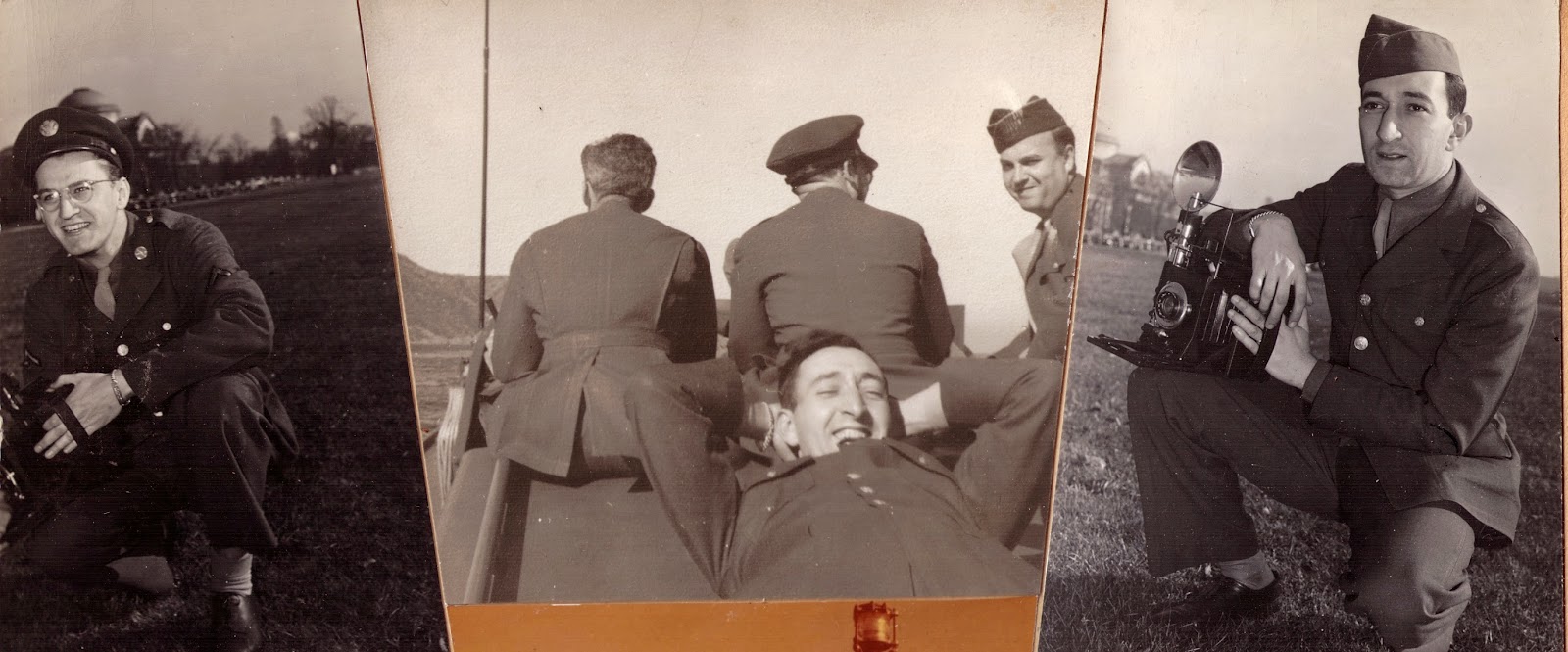
November, 1944, The National Mall, Washington, D.C. – Our EJZ and a small group of buddies, having completed survival and tactical training on Catalina and crossed back to the East Coast by train, continue briefing at OSS offices in the Capital. Further outtakes from the post of May 6, 204 include several photos of a still camera, of which this is the most clear:


With the help of kind friends we have identified this as a Graflex Speed Graphic large-format press camera.  The "Anniversary Speed Graphic" of 1940-1946 is described  No grey metal exposed, satin black with chrome trim. Wartime model: no chrome. Bed and Body track rails linked, allowing focusing of wide angle lens within body. Solid wire frame viewfinder. Trim on face of body is found only on top and sides.

"Anniversary Speed Graphic"
as described on the Graflex.org site.


The Graflex FAQ has all the details, after starting off with an iconic image of a c1940s press photographer, just as is shown in Hollywood movies of the time.  From the FAQ:

The Speed Graphic camera has two shutters - focal plane and in-lens; three viewfinders - optical, wire frame and ground glass; interchangeable lenses; a rise and fall front; lateral shifts; a coupled rangefinder; and a double extension bellows adaptable to lenses from 90mm to over 300mm.

The Speed Graphic looks complicated, but is one of the simplest and most flexible cameras made. Afflicted by a ``Rube Goldberg'' variety of features - three viewfinders! - you prove your skill everytime you use it. Nothing in the Graphic is automated; if you don't pay attention you can double expose, shoot blanks, fog previous exposures or shoot out of focus images. However, once you get used to it, it is amazingly easy to use.

. . . In 1940, Graflex announced the Anniversary Speed Graphic with Kodak Anastigmat (or the then all-new Ektar) lens. The new features included the coupled rangefinder and flash solenoid to use the then popular flashbulb. The bed would drop past horizontal, allowing the use of the new wide angle lenses. . . The Speed Graphic was the still camera of World War II. . . 

The Graflex Speed Graphic is still in use and has fans.

Graflex Speed camera owned by a professional photographer

From a fan comment at photo.net:  A lot of American photographers (and others) used the Graflex Graphic cameras, which are large format sheet film cameras that were equipped with the finest lenses of their days. The large format plus the best lenses and fine-grained film resulted in tremendously sharp and obscenely detailed pictures with wonderful tonality. No digital camera will get you images with a comparable high resolution.

The same fan comments once more, mentioning things that stir the childhood memory:  Add fine-grained film and you get stunning, sharp and detailed pictures with extreme resolution. I guess not even the most expensive digital back available today will beat such a large format negative in terms of details and "megapixels" -- to say nothing of "bokeh" and the nice, diffused look of large flash bulbs. . .And of course the film wasn't processed by the local one-hour photo minilab with a bored high-school-age minimum wage worker, but by dedicated professionals with decades of experience (Capa's misfortune was caused by an excited and new lab technician... I always wonder what happened to him).


Bokeh is a term new to me; Wiktionary defines it as a subjective aesthetic quality of out-of-focus areas of an image. . .   Sounds disturbing!  And it sounds like something not desirable in reconnaissance phototography. However, on looking again at old family photos, I'll see if anything of that description strikes me.  Can the photographer regulate how much bokeh enters into an exposure?

As for the nice, diffused look of large flash bulbs, that look is all over the interior shots of old family photos and wedding photos. Plus I remember standing often in an arranged group shot, the heat and light of JPZ's giant floodlights on stands full in all our faces.

Robert Capa's misfortune, mentioned by the fan, was that his images of the D-Day landings were almost all destroyed by a lab tech under pressure to rush the processing while unfamiliar with all the details of the film he was handling.  From a June, 2014 Vanity Fair article: Banks had put Capa’s films into the drying cabinet as usual, but was so frantic he closed the door with the heat on high, believing that would speed the process. Without ventilation, the heat melted all of the emulsion off the film.


The Graflex Anniversary Speed Graphic shows up in the Photobook in the hands of various team members - EJZ, Frenchie, and the third guy who shows up all the time but whose name we still do not know.  Now that we have seen clear pictures of this and the movie camera, and had some names to associate with them and some of their parts, we can notice them more reliably while looking through the photos in the Trove. That is the hope, anyway.


Thursday, March 5, 2020

Movie Camera on the National Mall, 1944

November, 1944, The National Mall, Washington, D.C. –   Our EJZ and a small group of buddies, having completed survival and tactical training on Catalina and crossed back to the East Coast by train, continue briefing at OSS offices in the Capital.

The Photobook, page 7, as well as certain outtakes related to it, show them on the National Mall practicing with the camera equipment they will be taking to China.  That post includes several photos of a certain movie camera, of which this one is the clearest:


Kind friends have identified it for us as a Cunningham Combat Camera. The Imperial War Museum has a good example.


From the IWM blurb:  Made from magnesium, it was a lightweight design which made it ideal for filming live combat footage. Features included special grip handles and a rifle stock which ensured it was steady enough for hand-held use in the field. It was electric-powered and ran off small batteries, had a four-lens turret and lenses robust enough for use in tough conditions.

Y.M. Cinema Magazine published several good images of this camera, such as this one:


From their article:  The camera excelled in its usability and simplification. Changing the film magazine was allowed on a push of a button, and the focusing mechanism was pretty sraightforward and simplified. Choosing the frame rate was done by a convenient switch. The options were 16, 24, and 32 frames per second.

American Cinematographer has an excellent short video up describing the Cunningham and showing how it works. They flip all the switches, push all the buttons, and let the viewer look through the viewfinder.


Saturday, May 14, 2016

Newsboy Photo Satisfactorily Dated to 11/30/1944

This is an update on my earlier post on The Newsboy: OSS CBI Photobook 7 - Further Outtakes - The Newsboy.  Our EJZ was in Washington DC in November 1944, training with Field Photo.

Below is the photo I call The Newsboy.


The closeup shows us the headline and the illustration by which we try to date the photo.

"ALLIED ARMIES AT LAST BARRIER SHORT OF RHINE"
and in the photo, a man leans over to examine some smashed thing.
What is it?

Metz fell to the Americans and Allies on 11/25/44.  To the east of Metz is the Saar River, oriented north-to-south.  The next river east of the Saar is the Rhine.

So let's say the Saar is the "Barrrier" and the Armies are at it.

From Metz to the Saar is 20-25 miles.  At 10 miles a day, that would take 2 or 3 days, say 11/28/44.

On arrival, news would be sent through the censors and travel by teletype to Stateside newsrooms.  Two days?  If so, the newspaper publication date is 11/30/44.

Also, the smashed thing, the mystery object, is a V-2 rocket, probably crashed on a London street.  From the Wiki piece:

The Germans themselves finally announced the V-2 on 8 November 1944 and only then, on 10 November 1944, did Winston Churchill inform Parliament, and the world, that England had been under rocket attack “for the last few weeks."
So that November, the V-2s were a big part of the latest news stories.


Ricochet people taught me all these particulars.  I'm grateful.


Thursday, October 2, 2014

Soldier Poetry


Chicago, mid-1944?

Washington, D.C.,  late 1944?

Port of embarkation, early 1945?

Troopship, 1945?


Wednesday, May 14, 2014

OSS CBI Photobook 8 - Travel Orders, 9 December 1944

(If you are reading this in email, remember: you can see this post in all its glory at Gene & Clara's.)

(And its glory will be undimmed if you download the free, simple, and effective ad-blocker from ghostery.com)


Gene was in Washington, D.C. for November and the first part of December, 1944.  See here, here, here, and here, and oh yes, here. On page 8 of the photobook we see the transition set into motion by the related documents.


They are four mimeographed copies
of the same document, in fact.

"HEADQUARTERS AND HEADQUARTERS DETACHMENT"
"OFFICE OF STRATEGIC SERVICES"
"ROOM 23, 2324 F ST.,  N.W."
"WASHINGTON, D.C."

"220.453 (30 Nov 44)"

"9 December 1944"


 1.  The following named enlisted men, this organization, will proceed by rail on or about 11 December 1944, from Washington, D.C. to Los Angeles, California, reporting upon arrival to Mr. Martin Easton, Room 1130, Rowan Building, 458 South Spring Street, Los Angeles, California, for Government transportation to Headquarters West Coast Training Center, Newport Beach, California.

Tec 5 Jack N. Hammond 20 527 564

Pfc Peter R. Beckett  36 645 366

Pfc Marcello G. Rotundo  12 138 361

Pfc Eugene J. Zdrojewski  42 021 053

Pvt Howard C. Lyon  37 896 (or maybe 096 - JZ) 032

Corporal Hammond would have worn insignia like this:


Hammond's monthly base pay was $66.  His rank was Technician Fifth Grade.  You can see insignia for all the Technical Sargeants 1942-1948 here.  Apparently, in some instances a Sargeant was addressed as "Corporal."  Why?  Beats me.  Still, we can look in these photos for his insignia.


I wish I could tell you, Dad, how artistic
and intriguing your arrangement is here.
And with you and your buddy at the top corners,
cameras in hand on the Mall,
we can know how important he was.
Which one of the four was he?
What was his name?


You let the ground tilt
so he would look right.

Hey!
I don't appreciate you letting
the Washington Monument tilt!
I'm going to override you here, Dad.


More from the Travel Orders:

2.  Upon arrival at Newport Beach, California, enlisted men will report to the Commanding Officer, Headquarters West Coast Training Center, for temporary duty of  approximately thirty (30) days in connection with the OSS activities and upon completion of this temporary duty enlisted men will return to their proper station, Washington, D.C.

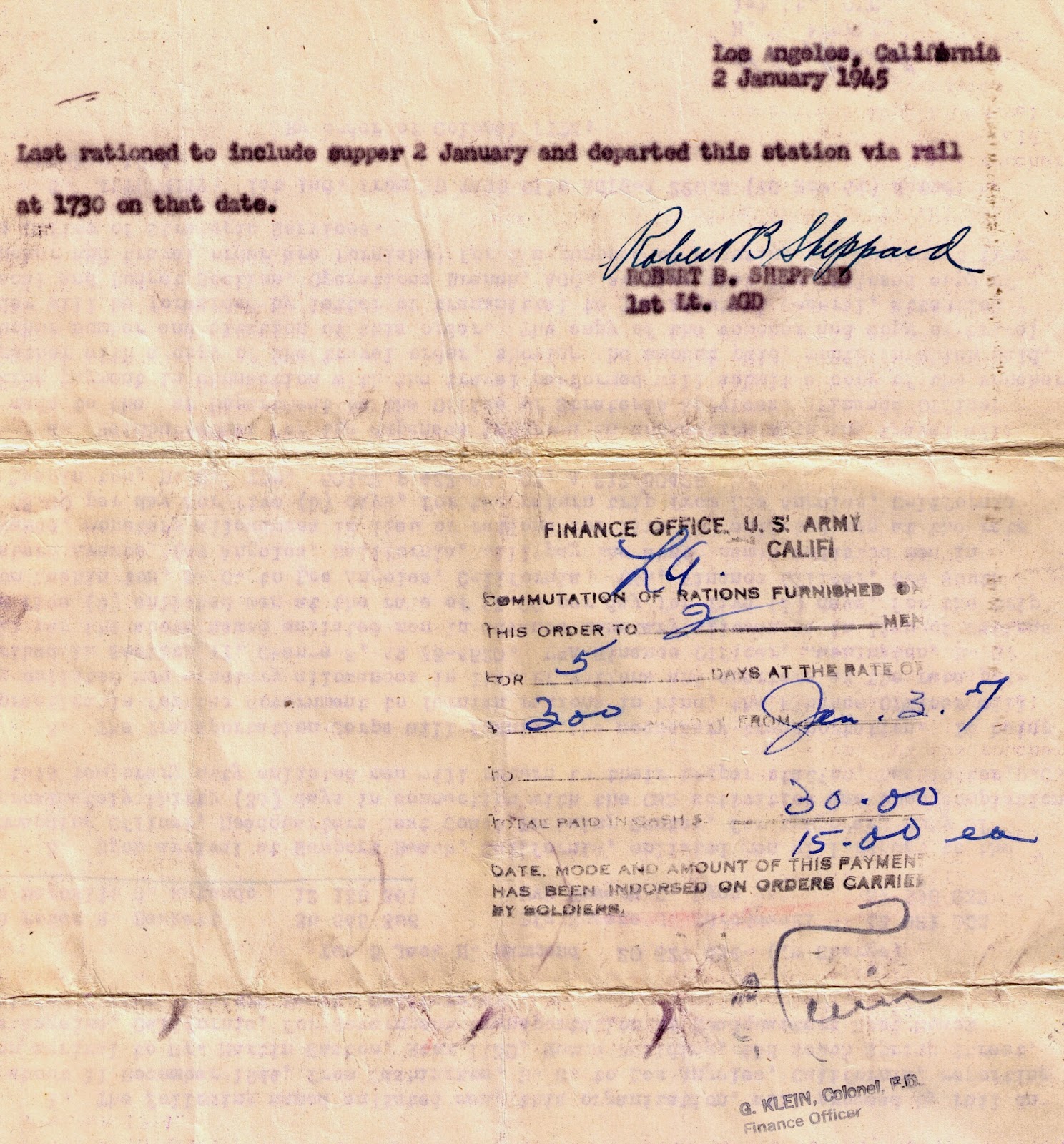
3.  . . . It being impracticable for the Government to furnish rations in kind, the Finance Officer will pay enlisted men monetary allowantces in lieu of rations and quarters at the rate prescribed . . . $3.00 a day for  five (5) days . . . 

So, did they make it to LA?  To Newport Beach? And then what did they do for "approximately 30 days?"  And by golly did they get their lunch money?


They got on the train all right.
Here they are at a stop at Lynndyl, Utah.
Founded in 1907, named after Lynn, Massachusetts,
Lynndyl's population had grown to 366 by 1940.

Is this Los Angeles?
Is that Eugene's personal camera?

Gene and his buddy.
I don't know his buddy's home town,
but I can tell you that Gene did not see palm trees
in his own hometown in December
or in any other month.


They got the same amount for lunch money in L.A. for the return trip.
But that was later.

Next up:  Santa Catalina Island, or at least the patrol boat there and back, along with a surprise.

Julie

Friday, May 9, 2014

OSS CBI Photobook 7 - Further Outtakes - The Newsboy

This newsboy sits on a D.C. sidewalk, counting his change.

"ALLIED ARMIES AT LAST BARRIER SHORT OF RHINE"
and in the photo, a man leans over to examine some smashed thing.
What is it?

Which of these images do you like better?
Top one is "Enhanced" by iPhoto; bottom one is not.
If you don't give me your opinion I'll just do what I want.

See the wire with which the roll of papers had been bound?

"PATTON GAINS 2 TO 5 MILES"
and
"Patton (something) Only (something) 9th Army (something)"

Which of these images do you like better?
Top one is "Enhanced" by iPhoto; bottom one is not.
If you don't give me your opinion I'll just do what I want.


I have tried to date this photo by way of these newspapers, but have had no luck yet googling Times-Herald or The News plus headlines or headline keywords.  Maybe someone smarter than I will figure it out and write to me.

In the meantime, we some dates and approximate dates.

Late August 1944:  Patton, having raced from the Seine to Lorraine, runs out of gas;                Eisenhower refrains from sending other, slower, Armies' gas to Patton.

September 1944:  Wehrmacht can't believe their luck, use subsequent weeks to strengthen defensive fortifications at Metz;

                 The die is cast: World War II will now end months later than otherwise, and will include a Battle of the Bulge.

09/07/44:  Patton sends General Stafford LeRoy Irwin to cross the Moselle.

Is this the subject of these our Mystery Date headlines?  Is the "Barrier" the Moselle River?

11/08/44: Patton's first units advance on Metz,


Is Metz, city and fortress, the subject of these our Mystery Date headlines?  Is the "Barrier" Metz?

11/18/44:  U.S. Army enters Metz.

11/25/44: Metz, city and fortress, capitulates, captured for the first time since 451 A.D., when it was Roman "Divodurum," sacked by Attila.

12/09/44:  date of orders for Pfc. Eugene Zdrojewski and three others to entrain for California within the following two days.


Julie


OSS CBI Photobook 7 - Further Outtakes - DC-3


This photo of a Douglas DC-3 just up from the tarmac we find on Page 7, on which all the other photos are recognizeably of Washington, D.C.  Did his group fly from Chicago to Washington, D.C.?

Or did they go up a few times with their new camera equipment to practice taking clear photographs from the airplane?

After all, photographs of the terrain, useful to military planners, was one of the objects of the entire mission in contemplation.

Below is an example, courtesy of a quick trip in True Tardis to a future page of the Photobook.


Julie


Thursday, May 8, 2014

OSS CBI Photobook 7 - Outtakes 2

In the primary post on Photobook, page 7, we saw our EJZ and his group training on this camera:


Prints related to this page show a second camera:


I would appreciate any information about these cameras; no luck so far in my attempts to identify them.


Is the bracelet in the photo the same as the one we have?


Was the jump medal soldered on to his original bracelet, or did they just give him a new one?


Next up: airborne photography, or maybe the timing of the Battle of the Bulge.
Julie


Tuesday, May 6, 2014

OSS CBI Photobook 7, continued: Outtakes

Last post dealt with the first of a couple of pages of photomontage of Washington, D.C. images.  We have as well some related, separate prints.


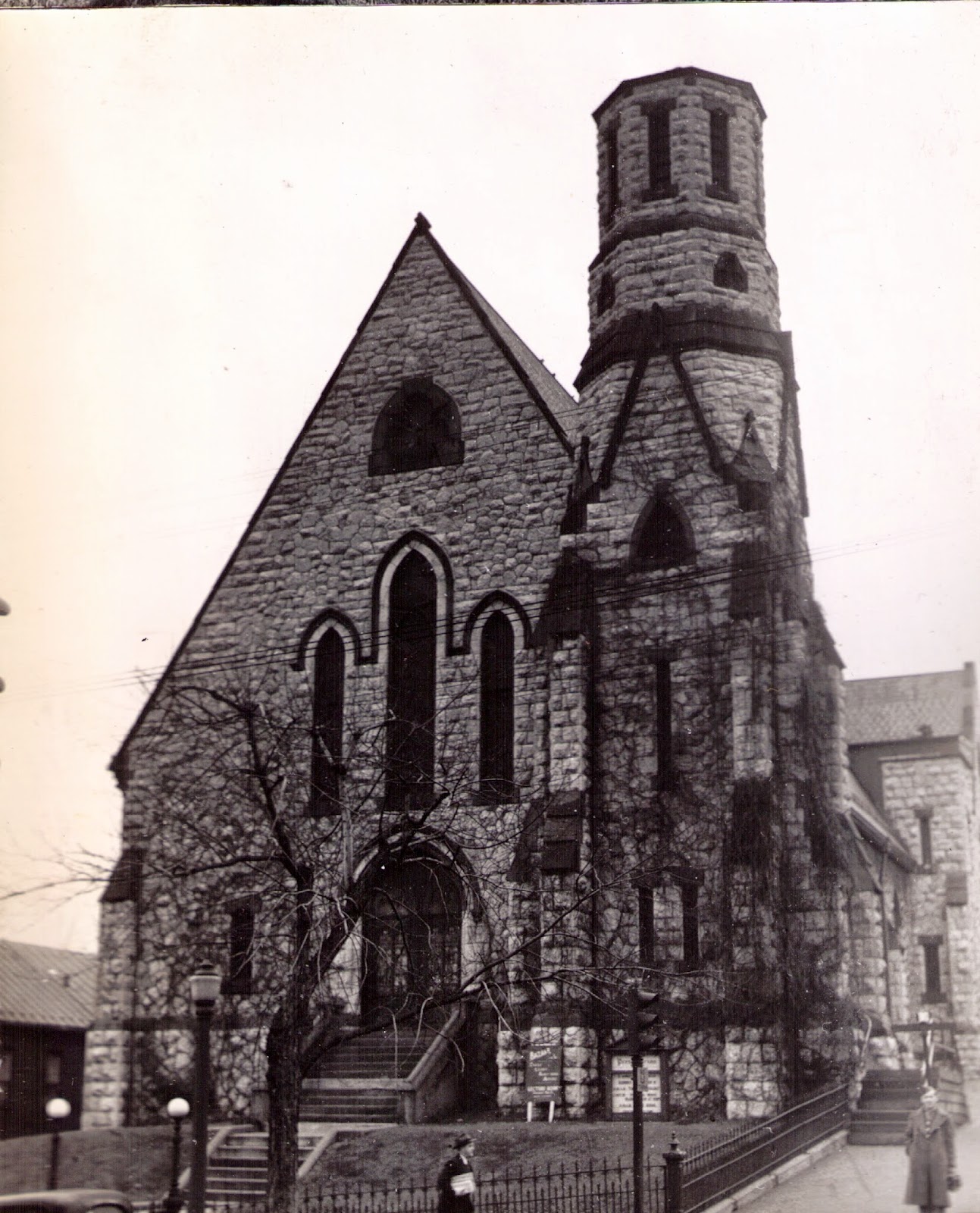
We also have a better scan of that Mystery Church, to include a tiny little tourist in the bottom-right corner.


In this group shot on the Mall, the seated figure at the left has something on the grass next to him:


It looks like a leather satchel with a hinged, rigid opening, like a medical bag.  What are those white boxes in it?

More outtakes next time - 
Julie